
In operational technology (OT) environments, where uptime is paramount and disruptions can ripple across production lines, a certain belief persists that cybersecurity harms operations.
This belief stems from a time when OT systems operated in near-total isolation, optimized solely for reliability and performance. However, as industrial environments become increasingly connected and cyber threats become more sophisticated, it’s time to re-examine this assumption.
In this post, we’ll examine the origins of this myth, its outdated nature, and, most importantly, how modern cybersecurity strategies can support, rather than sabotage, operational stability.
Where the Myth Comes From
For decades, OT systems lived in air-gapped environments. Designed for longevity, reliability, and continuous uptime, they weren’t connected to corporate IT networks or the Internet. Cybersecurity was often viewed as an unnecessary layer of complexity, seen as something that could introduce risks rather than mitigate them.
As digital transformation accelerated, these traditionally isolated systems became connected to broader enterprise networks. Suddenly, cybersecurity became a necessity. Yet skepticism lingered, driven by concerns like:
- Latency in time-sensitive industrial processes
- Downtime required for security updates or audits
- Reduced flexibility for trusted operators and engineers
- Compatibility issues with legacy equipment
And it’s true: when cybersecurity is poorly planned or executed, it can cause friction. However, the root problem isn’t the use of cybersecurity controls; it’s how cybersecurity is implemented and integrated into the organization.
The Reality: Cybersecurity Enables Stability
Modern OT cybersecurity frameworks are designed to complement operational processes, not interrupt them. When thoughtfully integrated, cybersecurity enhances:
- Reliability by preventing unexpected outages
- Resilience against insider threats and cyberattacks
- Safety by ensuring systems function as intended
Rather than thinking of cybersecurity as a burden, think of it as a seatbelt for your production line, unnoticeable during normal operation but vital in protecting against the unexpected.
Real-World Example: Norsk Hydro
In 2019, global aluminum producer Norsk Hydro was hit by a ransomware attack that crippled IT systems and disrupted production lines worldwide. Their factories had to revert to manual operations, and it took months to fully recover.
But here’s the important part: Hydro’s rapid response and recovery were possible because of their focus on operational resilience1. Segmented networks, backup systems, and well-rehearsed incident response plans prevented a total shutdown.
Takeaway: Proactive security planning doesn’t just mitigate attacks; it accelerates recovery and minimizes business impact.
How Cybersecurity Supports Uptime
1. Secure-by-Design Minimizes Disruptions
Building security into OT systems from the design phase prevents the need for intrusive retrofits later. Secure-by-design principles ensure that authentication, network segmentation, and threat detection are woven into the system’s DNA, not bolted on as afterthoughts.
Example:
Many manufacturing facilities are now implementing zero-trust architectures for OT environments. This approach assumes that no device or user should be trusted by default, thereby reducing the likelihood of lateral movement in the event of a breach.
Often, control networks are flat, allowing all devices to use and communicate on a single network. By implementing something as simple as VLAN technology, you can help your network communicate by segmenting and minimizing the impact of the network, as shown in image 1.
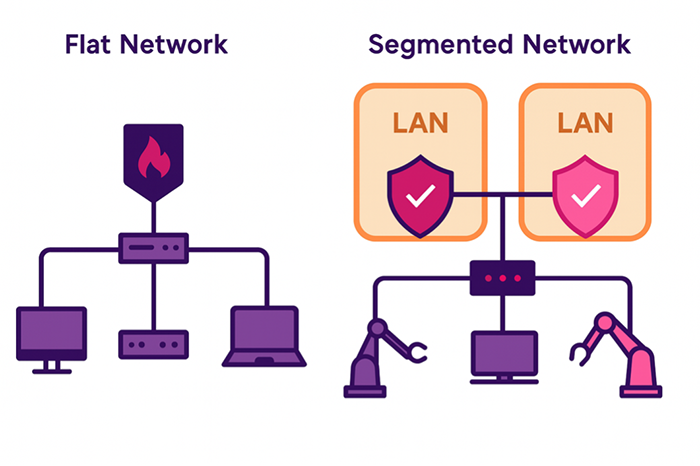
Image 1 – Basic Network Segmentation
2. Automation Reduces Risky Mistakes
Security automation, including identity controls, real-time monitoring, and automated patch management, reduces the likelihood of human error, one of the leading causes of security incidents.
Example:
Enaxy worked with a major energy company to introduce automated patch management in its control systems where appropriate. Instead of manual updates that required significant downtime, they now conduct security updates during pre-scheduled maintenance windows, minimizing operational disruption. Image 2 shows the value of automated patching.
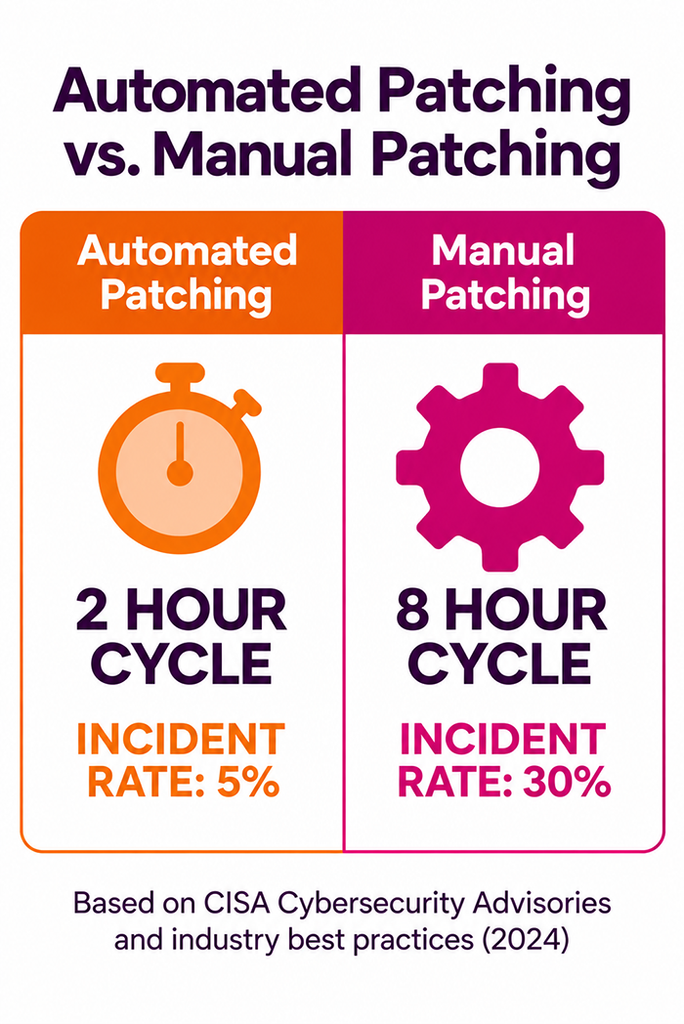
Image 2 – Automated vs Manual Patching2
3. Prevention Beats Remediation
A ransomware attack or a deliberate manipulation of critical systems is far more disruptive and costly than proactive cybersecurity measures.
Beyond the well-known Colonial Pipeline incident, consider the Nucor ransomware attack (2025). Nucor, one of America’s largest steel producers, faced partial production halts and data breaches. Their investment in segmented architecture helped contain the attack, but full recovery still took weeks. This extended timeline was due to the need for thorough system integrity checks, data restoration, preventing reinfection, and coordinating safe restarts across complex operations and supply chains.
Takeaway:
It’s not a question of if cyber incidents will happen, but how prepared you are to minimize their impact. It’s also not just about having the right tools; it’s about being fully ready to use them effectively. Regularly rehearsing incident response, maintaining verified backups, and ensuring that cross-functional teams are aware of their roles can significantly reduce downtime and overall impact when (not if) a cyber incident occurs.
Security Without Compromise: Practical Lessons
Organizations worldwide are proving that security and uptime can coexist. Key strategies include:
1. Align OT and IT Teams
Cybersecurity isn’t just an IT problem; it’s an organizational one. Bridging the traditional divide between OT and IT ensures that both performance and protection needs are met. When these teams align, they can collaboratively design controls that respect operational uptime while addressing real cyber risks. Without this alignment, organizations often face gaps in coverage, conflicting priorities, and slower incident response.
Example:
One chemical manufacturing firm we worked with created a joint OT/IT cybersecurity task force. They reported significantly faster incident responses and estimated a substantial reduction in downtime from cyber-related events in their case, as much as 30%. Much of this improvement came simply from employees knowing what to look for and having clear points of contact when events did occur.
This experience aligns with findings from SANS ICS/OT cybersecurity surveys, which show that cross-functional collaboration and clearly defined response roles improve detection and recovery times in industrial environments.
2. Deploy Non-Intrusive Monitoring
Passive, non-intrusive network monitoring tools analyze traffic without impacting operations. These systems watch for anomalies, such as unexpected data flows or unauthorized device connections, without inserting latency.
Example:
An oil refinery deployed passive intrusion detection systems (IDS) that flagged early signs of compromise without impacting production or introducing operational delays.
3. Integrate Security into Routine Maintenance
Integrating security updates into existing maintenance schedules is one of the most effective ways to reduce friction between safety, availability, and cybersecurity. By bundling patching and system hardening activities into planned outages, organizations can avoid unexpected downtime and operational disruptions.
This proactive approach ensures that both security and safety objectives are met without introducing surprises into the production schedule.
4. Create Critical Zones
Network segmentation ensures that if one part of the network is compromised, others remain secure and operational. Critical systems should be placed in highly protected zones, reducing risk to production even during an incident.
Practical Takeaways for OT Leaders
If you’re an OT leader, there are a few things we think you should take away from this article in your efforts to enable your OT teams to operate systems effectively.
- Start small: Focus on quick wins, such as basic network segmentation and access controls.
- Prioritize visibility: You can’t protect what you can’t see. Deploy asset inventory and monitoring solutions.
- Embed security in culture: Train operators, engineers, and managers on basic cybersecurity hygiene.
- Plan for recovery: Develop and rehearse incident response plans tailored to OT environments.
The Bottom Line
Cybersecurity isn’t a brake pedal for your operations, it’s a guardrail that keeps you on course. Well-implemented security measures protect uptime, reduce risk, and improve your ability to recover quickly from incidents.
In an era where OT environments are increasingly connected and interdependent, security is no longer optional, but integral to operational excellence.
Ignoring cybersecurity doesn’t avoid disruption; it invites it. By embedding cybersecurity into your OT systems today, you’re not only protecting your business, but you’re also safeguarding its future.
1 https://time.com/6080293/norsk-hydro-ransomware-attack/
2 SANS ICS/OT Cybersecurity Survey 2023: https://www.sans.org/white-papers/ics-ot-cybersecurity-survey-2023/
Ponemon Institute Cost of a Data Breach Report (via IBM): https://www.ibm.com/reports/data-breach
CISA Vulnerability Management Best Practices: https://www.cisa.gov/resources-tools/resources/vulnerability-management
Dragos Year in Review Reports: https://www.dragos.com/year-in-review/