
When you think of basic cybersecurity, what comes to mind? For most people (and even many organizations), it starts and ends with installing an antivirus program and setting up a firewall. This traditional mindset has become so widespread that it feels like an unquestionable truth: “If I have antivirus and a firewall, I’m secure.”
However, here’s the reality: this thinking is not only outdated, but also dangerous. In today’s hyperconnected, cloud-driven, and threat-saturated world, this narrow approach leaves huge gaps that attackers are more than happy to exploit.
This blog will break down why antivirus and firewalls alone are insufficient, highlight the real threats businesses face today, and outline what a modern, robust security strategy truly entails.
The Origin of the Myth
To understand the origin of this myth, we need to look back a few decades.
In the late 90s and early 2000s, the typical security threat was a mass-distributed virus or worm designed to spread as quickly as possible. Security products like Norton, McAfee, and others gained popularity because they provided adequate protection against known threats.
Firewalls, on the other hand, were designed to act as gatekeepers, blocking unauthorized traffic and shielding the internal network from external attackers. In a time when most organizations had a clear network perimeter, this was a reasonable approach as it worked to create a big wall around a small, predictable IT environment.
However, this model was built for a different era. Today’s environment is not so simple or static.
The Evolving Threat Landscape
The cyber threat landscape has undergone a dramatic transformation over the past decade. Attackers are no longer solely interested in mass infections; they now focus on targeted attacks, ransomware, data theft, espionage, and the disruption of critical services.
Some of the most notable changes in today’s threat landscape include:
1. Advanced Persistent Threats (APTs)
These are prolonged, targeted attacks designed to stealthily infiltrate an organization’s network and remain undetected for long periods. APT groups often use custom malware, stolen credentials, and sophisticated social engineering tactics.
2. Fileless Malware
Unlike traditional malware, which relies on executable files, fileless attacks utilize legitimate system tools and execute in memory. Because they leave fewer traces and don’t rely on classic signatures, traditional antivirus tools struggle to detect them.
3. Supply Chain Attacks
Rather than attacking a target directly, attackers often go after trusted third-party vendors or software suppliers, a strategy that allows them to bypass strong perimeter defenses by exploiting trusted relationships.
One of the most infamous examples of this is the SolarWinds Orion attack, discovered in December 2020. This supply chain compromise was highly sophisticated and had a profoundly impactful effect.
What happened?
Attackers, believed to be affiliated with a state-sponsored group (tracked as APT29 or “Cozy Bear”), infiltrated the build environment of SolarWinds, a widely used IT management software company. They inserted a stealthy, backdoor malware known as SUNBURST into legitimate software updates of the SolarWinds Orion platform, which was then distributed to customers.
Why was it so dangerous?
The backdoor was digitally signed and delivered via legitimate channels, meaning it passed standard antivirus, firewall, and code verification checks.
Once installed, it provided attackers with remote access to the compromised systems, allowing them to escalate privileges, move laterally, and exfiltrate data all without triggering traditional security alerts.
Victims included some of the most sensitive and well-defended organizations in the world:
- U.S. federal agencies (including the Departments of State, Treasury, and Homeland Security)
- Major corporations like Microsoft, Cisco, and FireEye
- Critical infrastructure and cybersecurity firms
4. Ransomware-as-a-Service (RaaS)
Cybercrime has evolved into a business model. Ransomware developers now offer their tools to affiliates, making it easier for less sophisticated criminals to launch highly damaging attacks.
5. Insider Threats
Employees, contractors, or other insiders can intentionally or accidentally cause security incidents. These threats are invisible to antivirus software and often bypass firewall protections because they originate from a trusted insider.
The Shortcomings of Antivirus
Traditional antivirus software primarily uses signature-based detection, which involves scanning files and comparing them to a database of known malware signatures. If there’s a match, it blocks the file.
However, attackers now use polymorphic malware, which constantly changes its code to avoid detection. Combined with zero-day exploits (vulnerabilities for which no patch exists yet), these tactics render signature-based antivirus largely ineffective against sophisticated threats.
While modern anti-virus solutions have started to incorporate behavior-based and heuristic analysis, many still struggle with advanced evasion techniques.
Why Firewalls Alone Can’t Save You
Firewalls are still vital for blocking unauthorized access and segmenting networks, but they have significant limitations:
- They protect the perimeter, not the inside. Once an attacker gains access to the network (for example, via a phishing email or stolen VPN credentials), they can often move freely within the network.
- They can’t stop insider attacks. If a malicious insider abuses their access, a firewall won’t prevent data theft or sabotage.
- They lack visibility into cloud and hybrid environments. Today’s IT infrastructures extend beyond a single office or data center. Workloads are in the cloud, users work remotely, and data travels across SaaS applications. A traditional perimeter-based firewall offers limited protection in this distributed environment.
New Realities Require New Defenses
The traditional “castle-and-moat” approach (secure the perimeter and assume the inside is safe) no longer holds up.Modern security strategies revolve around the assumption that breaches are inevitable. The focus shifts from purely prevention to detection and response, minimizing damage and recovery time.
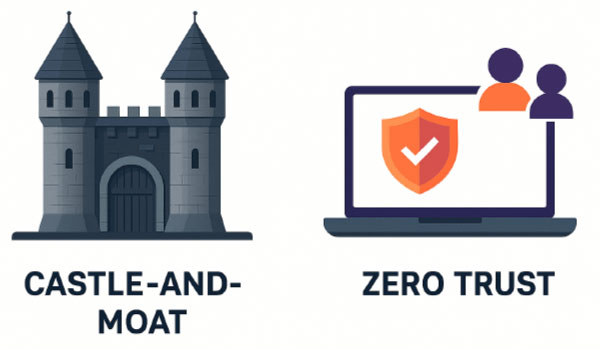
Image 1 – “Castle-and-Moat vs Zero Trust”
Key components of a modern defense-in-depth strategy include:
1. Endpoint Detection and Response (EDR)
EDR tools go far beyond antivirus. They continuously monitor endpoint activity, analyze behavior, and provide visibility into advanced threats. EDR solutions can detect suspicious patterns, such as unusual privilege escalations or lateral movement, and allow security teams to isolate or remediate infected endpoints.
2. Extended Detection and Response (XDR)
XDR expands on EDR by integrating telemetry from endpoints, networks, servers, cloud workloads, and more into a unified view. This helps identify coordinated attacks that span multiple environments, providing better context for responding to incidents.
3. Zero Trust Architecture
Zero Trust operates on the principle of “never trust, always verify.” Rather than assuming anything inside the network is safe, it continuously authenticates and authorizes every user and device.
This model requires granular access controls, micro segmentation, and strong identity verification, such as multi-factor authentication (MFA). It drastically reduces an attacker’s ability to move laterally within a network.
4. Security Awareness Training
Phishing remains one of the most common initial attack vectors. Even the best technical controls can be bypassed if an employee clicks on a malicious link or shares their credentials.
Regular, engaging security awareness training empowers employees to recognize and report suspicious activities. Making security a shared responsibility is critical for long-term resilience.
5. Identity and Access Management (IAM)
IAM solutions help enforce the principle of least privilege, ensuring that users have access only to the data and systems necessary for their roles. Coupled with strong authentication, this reduces the risk of credential abuse.
6. Vulnerability Management and Patch Management
Attackers frequently exploit known vulnerabilities that have not been patched. An effective vulnerability management program involves continuous scanning, prioritizing high-risk vulnerabilities, and promptly applying patches.
7. Network Segmentation
Instead of a flat network where attackers can roam freely, segmentation divides the network into isolated segments. Even if one segment is compromised, an attacker’s access to other parts of the environment is severely limited.
8. Security Monitoring and Incident Response
Continuous monitoring through a Security Operations Center (SOC) or a Managed Detection and Response (MDR) service helps detect threats in real-time. Having an incident response plan ensures that when (not if) an attack occurs, your organization can respond quickly to contain the damage.
The Role of Antivirus and Firewalls Today
So, should we throw antivirus and firewalls out the window? Absolutely not.
They remain essential components of a layered security strategy. Antivirus can still catch many commodity threats and block known malicious files before they execute. Firewalls help manage network traffic and reduce exposure to external attacks.
However, they should be viewed as baseline protections, not comprehensive solutions. Depending solely on them is like relying on a single lock to secure a house full of valuables; it may deter some opportunists, but it won’t stop determined intruders.
Conclusion: Beyond the Myth
The idea that “antivirus and firewalls are enough” is not just a harmless misconception; it’s a recipe for disaster in today’s digital landscape.
Modern cyber threats are sophisticated, evolving daily, and capable of bypassing traditional defenses with ease. Organizations need a multi-layered, holistic approach to security, combining technology, processes, and people.
Here’s a quick checklist to guide your security evolution:
- Implement EDR and XDR solutions
- Adopt Zero Trust principles
- Provide security awareness training
- Enforce strong IAM policies
- Establish vulnerability and patch management
- Segment your network
- Build and test an incident response plan
- Foster a security-first culture
Antivirus and firewalls are no longer the finish line; they’re just the starting blocks. To truly protect your business, data, and people, you need to develop a layered defense strategy that can adapt to a rapidly changing threat landscape.
Don’t let a false sense of security blind you. Move beyond the myth, embrace a proactive security posture, and make cybersecurity a living, breathing part of your organization’s DNA.
Ready to evolve your cybersecurity strategy? Contact the Enaxy team at info@enaxy.com to build a modern, adaptive defense framework that fits your business.